🔖 This page gives you an overview of Ecosystem Services (ESS)
More on ecosystem services

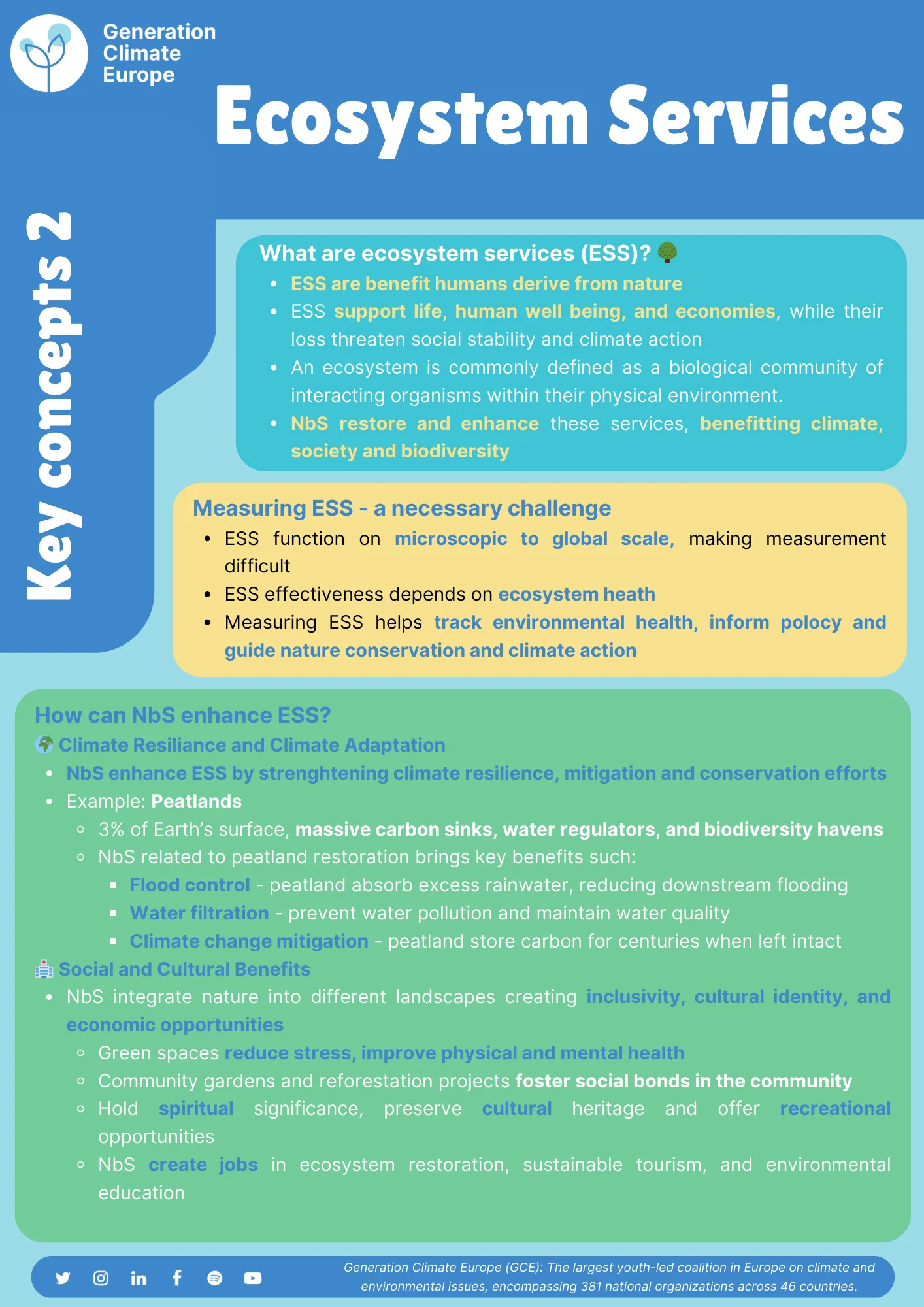
What are ESS?
An ecosystem is commonly defined as a biological community of interacting organisms within their physical environment. As part of the ecosystem, humans obtain many services based on ecosystems’ ecological functioning and the state of biodiversity. These “contributions of nature to people” are known as ecosystem services (ESS) and have great ecological, economic, and social value.
Food or raw material provisioning are common examples of what nature brings to humans. However, ESS is not limited to this, and nature can contribute to regulating and, for example, improving water or air quality. These services are based on an interconnection between species in an ecosystem.
Soil can bring forth many services benefiting humans . A network of soil microorganisms could ensure the right levels of nutrients for certain crops or plant roots or even holding sediment in one place, which ensures a river does not flood. These ecosystem services are extensive in numbers and incredibly complex. They appear from a microscopic level to even a global scale.
Measuring such complex systems is a difficult task, which is why only some parts of the natural system can be measured to evaluate the state of the environment. The same ecosystem can produce ESS with different effectiveness depending on the state of development of the ecosystem. For example, the density and diversity of tree species in a forest environment influence soil erosion control and carbon sequestration . When ecosystem services are lost (such as pollination or climate regulation), not only a part of human activities but also agriculture and the habitability of certain regions can be threatened.
How can NbS enhance ESS
In this section, we’ll explore how NbS can enhance ecosystem services with a focus on building resilience and adapting to the growing impacts of climate change. Climate resilience and adaptation are two critical components of NbS. Resilience means strengthening ecosystems and communities so they can bounce back from extreme events like hurricanes or droughts. Adaptation is about adjusting to new conditions—preparing for droughts or flooding, changing rainfall patterns, or more intense heat waves.
For example, a healthy forest can act as a sponge during heavy rains, reducing flooding downstream. A restored wetland can act as a natural water reservoir during a drought. And a thriving coral reef can reduce the force of waves hitting a coastline, protecting communities from storm surges.
Example of peatland restoration
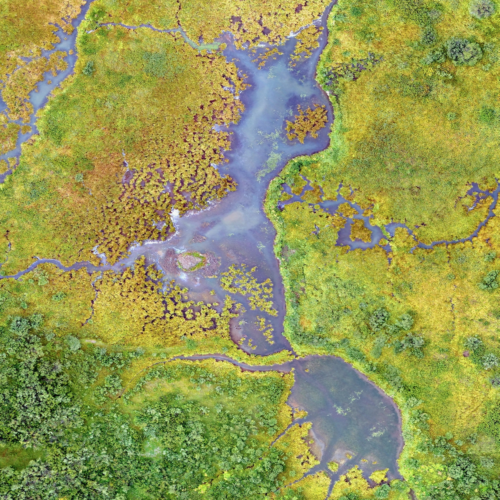
Peatlands are among the most valuable ecosystems on Earth. Covering only 3% of the land surface, they store much of the terrestrial carbon while acting as water regulators, biodiversity havens, and climate stabilizers (Strack et al., 2023).
Peatlands form over thousands of years through the accumulation of partially decayed organic matter in waterlogged conditions. These unique wetlands perform several critical functions:
- They absorb and store vast amounts of rainwater, reducing flood risks downstream.
- Their waterlogged soils provide habitat for rare species, prevent the oxidation of organic carbon and act as natural filters improving water quality.
- And, in their undisturbed state, they act as a brake on climate change by sequestering carbon.
However, human activities such as drainage for agriculture, peat extraction, and wildfires have degraded peatlands worldwide. Degraded peatlands not only lose their capacity to store water but also become net emitters of greenhouse gases, releasing centuries of stored carbon into the atmosphere (Doelman et al., 2023).
In the UK there are different projects for the restoration of peatland. Notably, the Wildlife Trust network has been restoring around 60,000 hectares of peatland since 2008 through government and non-government funds.
This collective restoration efforts have saved almost a one million tonnes of carbon since (The Wildlife Trusts, 2024). The Trust collaborates with local farmers, landowners, and volunteers to ensure long-term sustainability.
Peatland restoration isn’t without challenges. It requires significant investment, long-term commitment, and buy-in from local stakeholders.
However, the rewards are undeniable. Peatlands have a huge climate change mitigation potential thanks to their carbon sequestration skills. They are home to incredible fauna and flora, enhancing biodiversity.
They are a perfect example of how NbS can build resilience and help adapting to Climate Change.
References
Doelman, J. C., Verhagen, W., Stehfest, E., & Van Vuuren, D. P. (2023). The role of peatland degradation, protection and restoration for climate change mitigation in the SSP scenarios. Environmental Research: Climate, 2(3), 035002.
Strack, M., Davidson, S. J., Hirano, T., & Dunn, C. (2022). The potential of peatlands as nature-based climate solutions. Current Climate Change Reports, 8(3), 71-82.
The Wildlife Trusts. (2024, August 9). The Wildlife Trusts are restoring an enormous 60,000 hectares of peatlands – but it’s missing from UK Government’s net zero numbers | The Wildlife Trusts. Wildlifetrusts.org. https://www.wildlifetrusts.org/blog/kathryn-brown/wildlife-trusts-are-restoring-enormous-60000-hectares-peatlands-its-missing-uk
Focus on Social and Cultural Benefits
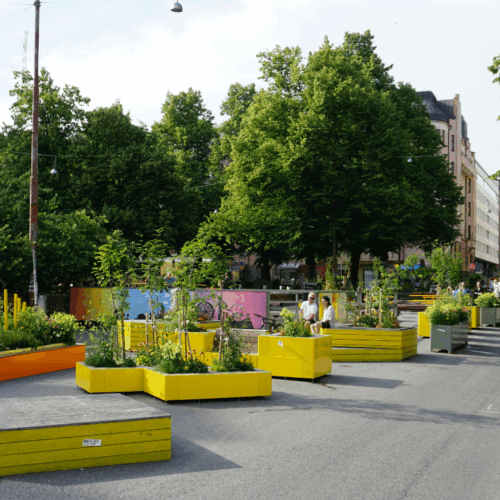
Nature-based Solutions enhance cultural ecosystem services by creating spaces that improve aesthetic experiences, foster spiritual connections, and support the preservation of cultural heritage. For example, green infrastructure in urban areas, such as parks and tree-lined streets, enhances the visual appeal of landscapes, making them more enjoyable and fostering community pride. Additionally, natural spaces often hold spiritual or cultural significance, serving as venues for traditional ceremonies or personal reflection. Restoring ecosystems like wetlands or forests can safeguard cultural practices tied to these areas while also conserving biodiversity. Similarly, NbS promote recreational opportunities, such as hiking, birdwatching, or picnicking, which improve the physical and mental well-being of individuals while creating a deeper appreciation for natural environments.
From a social perspective, NbS directly contribute to well-being enhancement by offering accessible spaces that reduce stress, improve mental health, and provide safe environments for physical activities. Green spaces also create opportunities for social interaction, strengthening community ties and fostering inclusivity. For example, community gardens or reforestation projects bring diverse groups together, fostering collaboration and reducing social isolation. NbS also play a role in the advancement of equality, as they can empower disadvantaged groups by improving access to resources like clean air and green areas.
In terms of economic and educational benefits, NbS encourages the growth of employment through jobs in ecosystem restoration, sustainable tourism, and urban greening. They also advance education development by providing informal learning opportunities about conservation and sustainability, especially when integrated into schools or community programs. Lastly, NbS contributes to safety advancement by mitigating climate risks such as flooding or extreme heat, enhancing resilience and creating a stronger sense of security for vulnerable populations.
By integrating these cultural and social dimensions, NbS ensures that ecosystem services are not only preserved but are also deeply valued and equitably distributed, creating thriving communities that coexist harmoniously with nature.
Quiz
Have you followed well the course? Try out our quiz!
↪︎ Have a look at our dedicated NbS map for a visual and interactive overview of Nature-based Solutions.
↩︎ Get back to the previous module Key Concepts 1 on NbS or to the main NbS training page